You’ve tried the usual drill—lap after lap, same stroke, same pace. Yet weeks go by and you’re barely stronger, not noticeably leaner, and certainly not faster. The problem? Most swimming routines for fitness treat the pool like a treadmill with chlorine. Repetition without progression is just wasted buoyancy.
Why Generic Swim Workouts Flop
Most online plans copy-paste Olympic templates onto casual swimmers. Bad idea. Elite athletes train 6 hours a day. You’ve got 45 minutes after work. And your goals aren’t gold medals—they’re endurance, joint relief, functional strength, maybe shedding stubborn fat.
Here’s the reality: swimming burns fewer calories than you think if intensity stays low. Glide too much, breathe too easy, and your metabolic engine never revs. Worse—many routines ignore stroke efficiency, causing shoulder strain instead of sculpting it.
Build Your Own Adaptive swimming routines for fitness
Forget cookie-cutter sets. Build a modular routine that scales with your energy, time, and skill. Start with this framework—then tweak weekly based on how your body responds.
Mix Strokes to Prevent Plateaus
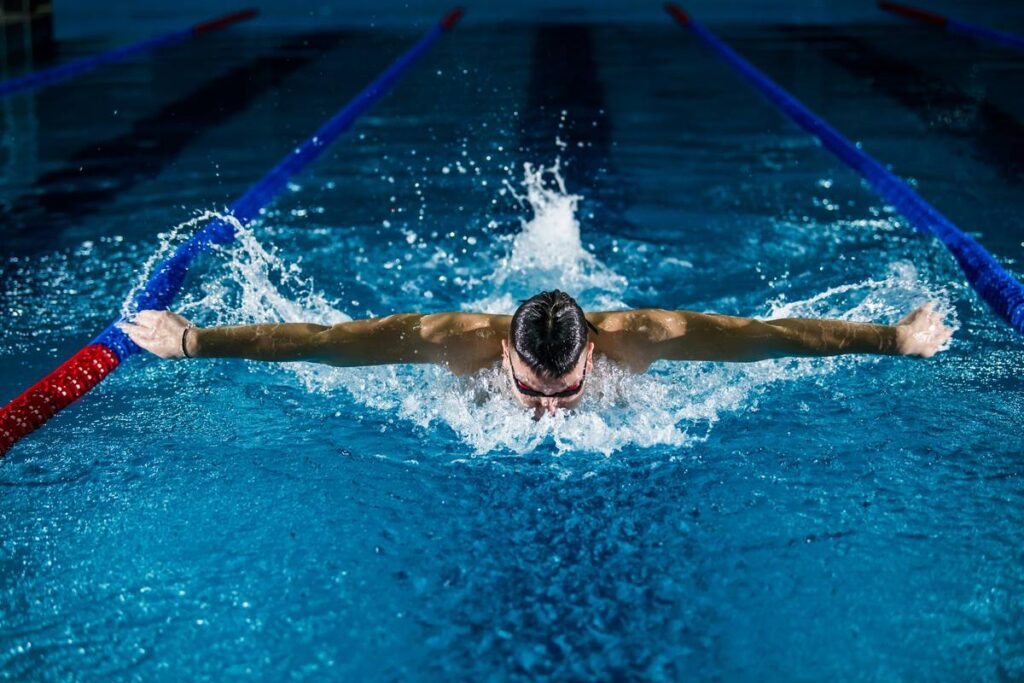
Freestyle dominates most workouts. But rotate in backstroke for spinal decompression, breaststroke for hip mobility, and butterfly bursts for explosive power. Variety isn’t just fun—it forces different muscle groups to adapt, keeping metabolism guessing.
Zone-Based Intensity Beats Mindless Laps
Use heart rate or perceived exertion to structure effort:
- Zone 1 (Easy): Conversational pace. Recovers lungs.
- Zone 3 (Threshold): Hard but sustainable. Burns fat efficiently.
- Zone 5 (Sprint): All-out. Triggers EPOC (afterburn effect).
Most people swim only in Zone 2—too slow to build fitness, too fast to recover. No wonder progress stalls.
Time > Distance for Busy People
No pool clock? No problem. Structure sets by minutes, not meters. Example: “4 minutes freestyle hard, 2 minutes rest.” This respects real-world constraints—and keeps you honest about pacing.

| Routine Type | Duration | Primary Benefit | Ideal For |
|---|---|---|---|
| Endurance Builder | 40–60 min | Cardio stamina, lung capacity | Beginners, stress relief seekers |
| HIIT Swim | 25–35 min | Fat loss, metabolic boost | Intermediate, time-crunched adults |
| Technique Focus | 30–45 min | Stroke efficiency, injury prevention | Rehabbing swimmers, form nerds |
| Open-Water Prep | 50–70 min | Sighting, navigation, cold tolerance | Triathletes, outdoor enthusiasts |

The Industry Secret: Land-to-Water Transfer Is Overrated
Certified coaches won’t say this publicly—but dryland training often sabotages swim-specific gains. Yes, core strength matters. But endless planks and pull-ups create tension that fights hydrodynamics. Water rewards relaxation, rhythm, and alignment—not brute force.
The secret? Do 80% of your conditioning *in* the water. Use resistance tools like drag socks or paddles *sparingly*—they teach bad habits if overused. Instead, focus on underwater streamline drills and controlled exhalation. Efficiency trumps effort every time. And here’s the kicker: a 20-minute technique-only session burns more calories than 45 minutes of sloppy laps—because your nervous system works harder.
Frequently Asked Questions
How often should I swim for general fitness?
Three times weekly strikes the balance—enough for adaptation, enough recovery. Less than two, and you lose momentum. More than four, and fatigue erodes form.
Can swimming replace running for cardio?
Absolutely—if you push intensity. Easy swimming won’t cut it. But threshold sets at 80% max effort deliver equal or better cardiovascular stimulus with zero joint impact.
What’s the biggest mistake beginners make?
Holding their breath. It spikes anxiety, ruins rhythm, and tanks endurance. Exhale steadily underwater—every stroke, every kick. Oxygen management is 50% of fitness gains.