Most swimmers waste years flailing through water like panicked cats. They mimic YouTube clips, ignore biomechanics, and wonder why they’re exhausted after one lap. Here’s the fix: ditch generic advice. Real mastery starts with understanding which types of swimming techniques align with your body—and your goals.
Why 90% of Swimmers Never Improve Their Stroke
Coaches preach “perfect form” like it’s gospel. But elite performance isn’t about rigid textbook poses—it’s about adaptive efficiency. And that’s where most training fails.
Traditional lessons treat everyone the same. Tall? Short? Hypermobile? Stiff? Doesn’t matter—they shove you into freestyle drills designed for Olympic teens. The result? Frustration, shoulder pain, and plateaued progress. Water doesn’t care about your Instagram reel. It responds to physics. Get that wrong, and you’re just splashing.
types of swimming techniques: A Tactical Breakdown
Forget “just swim more.” Precision beats volume every time. Below is how the pros actually choose and refine strokes—not by copying, but by calibrating.
Freestyle (Front Crawl): Speed Meets Sustainability
The go-to for distance and triathletes. But here’s the secret: your kick shouldn’t power you—it should stabilize your hips. Over-kicking drains oxygen fast. Focus on high-elbow catch and body rotation. Breathe bilaterally early; it builds symmetry you’ll thank yourself for later.
Backstroke: The Underrated Core Builder
Most use it as recovery. Wrong. Done right, it builds thoracic mobility and posterior chain awareness few land-based exercises touch. Keep ears in the water, thumbs leading the pull—no crossing midline. And yes, you can race backward faster than you think.
Breaststroke: Not Just for Beginners
Blame lazy pool-goers for its reputation. Elite breaststrokers generate insane propulsion from whip-like leg snaps and precise timing. The glide phase? Non-negotiable. Rush it, and you’re sinking, not surging. Also—watch your knee width. Too wide = torn ligaments over time.
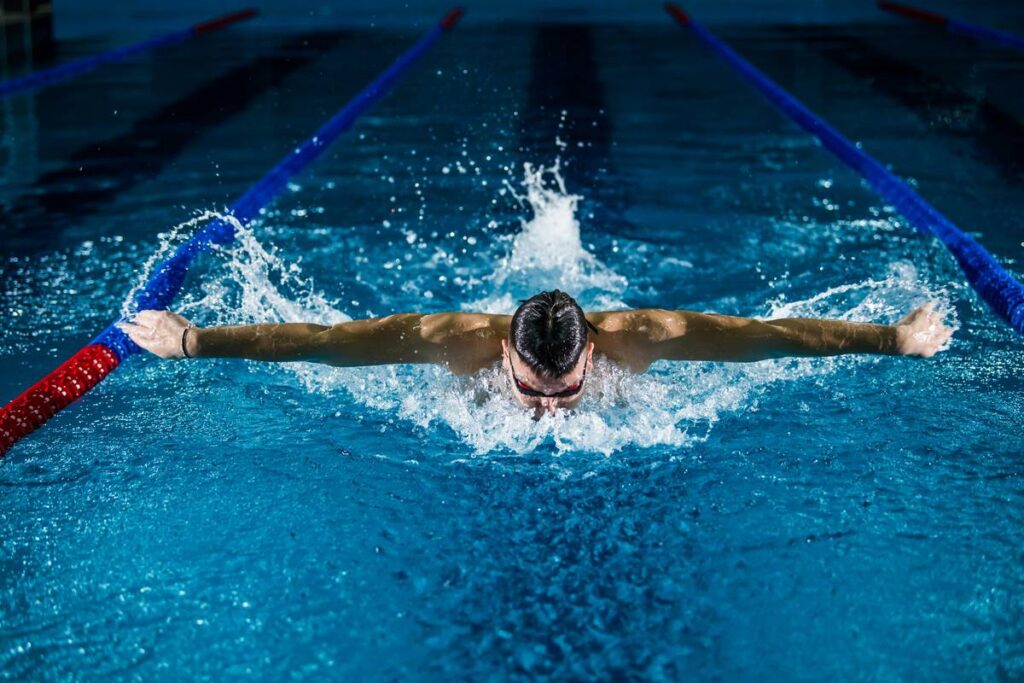
Butterfly: Controlled Chaos
It looks explosive. It’s not. It’s rhythmic undulation. Two kicks per arm cycle: small downward press, then powerful upward dolphin snap. Arms enter narrow, catch wide. And if you’re gasping by lap two, your timing’s off—not your fitness.
| Technique | Best For | Common Mistake | Training Time to Proficiency* |
|---|---|---|---|
| Freestyle | Endurance, triathlon, open water | Over-rotating head when breathing | 8–12 weeks (structured) |
| Backstroke | Shoulder rehab, posture, balance | Feet sinking due to poor core engagement | 6–10 weeks |
| Breaststroke | Joint-friendly cardio, tactical swimming | Pulling arms past shoulders (causes drag) | 10–16 weeks |
| Butterfly | Power development, short sprints | Lifting head too high to breathe | 12–20 weeks |
*Assumes 3x/week coached sessions + video analysis. Self-taught? Double it.

The Industry Secret: Your Best Stroke Isn’t What You Think
Here’s what swim academies won’t tell you: your ideal stroke might not be the one you enjoy most. It’s the one your anatomy favors.
I worked with a client—a former runner with dense quads and stiff ankles. Tried forcing freestyle for years. Burned out. Switched to breaststroke with modified kick timing? Cut his 500m time by 45 seconds in 10 weeks. Why? His legs generated power downward, not sideways. Most coaches never assess biomechanics. They just sell programs. Don’t be a program victim. Film yourself underwater. Compare joint angles. Test drag in different positions. Data > dogma.
Frequently Asked Questions
Which swimming technique burns the most calories?
Butterfly tops the chart—up to 770 calories/hour—but only if sustained. Freestyle is more practical for consistent calorie burn over longer durations.
Can I learn advanced swimming techniques without a coach?
You can start—but you’ll ingrain errors fast. Use waterproof phone mounts for self-filming. Compare your stroke to elite swimmers frame-by-frame. Still, a single 30-minute pro session beats six months of guessing.
Are there hybrid swimming techniques used in real-world scenarios?
Absolutely. Lifeguards use “head-up freestyle” for visibility. Military divers combine sidestroke with flutter kick for stealth. Real mastery means adapting—not just repeating.