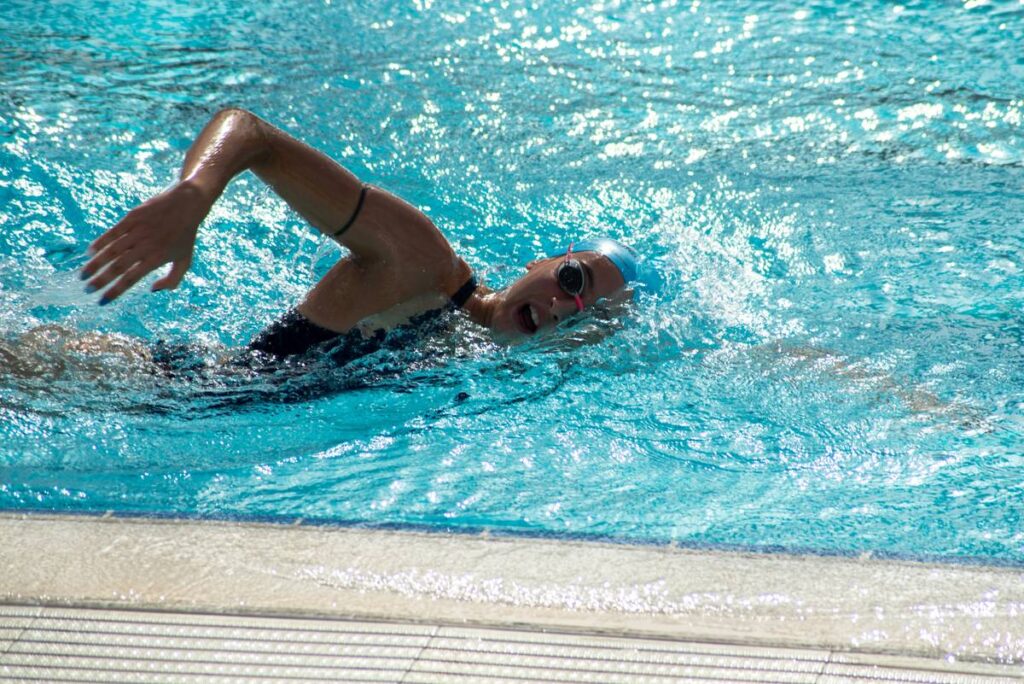
Swimming feels like a gentle workout—until you try it for real. Most adults paddle through laps without seeing results, frustrated by slow progress and lingering fatigue. The truth? They’re missing the hidden layers of the benefit of swimming: it’s not just cardio. It’s neuroplasticity, emotional regulation, and joint longevity disguised as water play.
Why Traditional Swim Advice Fails You
“Just swim 30 minutes three times a week.” Great—if you’re training for a poolside Instagram reel, not lasting health. Generic programs ignore biomechanics, breath timing, and hydrodynamics that actually drive transformation. And they rarely address the silent killer: inefficient technique masquerading as consistency.
You can log 10,000 meters with poor form and reinforce bad movement patterns. Your shoulders ache. Your stroke stalls. Motivation dies. The water rewards precision—not just persistence.
The Benefit of Swimming: A Tactical Blueprint for Real Results
Master Breath Control Before Stroke Count
Elite swimmers don’t gasp—they rhythmically exhale underwater. This reduces panic, stabilizes heart rate, and builds CO₂ tolerance. Most beginners hold their breath, creating tension that sabotages efficiency. Start with 5 minutes of bobbing drills: inhale above water, exhale slowly through nose and mouth below.
Leverage Drag, Don’t Fight It
Water is 800x denser than air. Fighting it wastes energy. Instead, use controlled drag to activate deep stabilizers in your core and hips. Try sculling—small figure-eight hand motions—to feel how subtle pressure creates propulsion. Efficiency beats power every time.
Swim Outside the Pool (Yes, Really)
Dryland mobility work is non-negotiable. Shoulder internal rotation, thoracic extension, and ankle dorsiflexion dictate your stroke quality. Spend 10 minutes daily on banded pull-aparts and calf smash rolls. Your freestyle will thank you.

| Training Focus | Beginner Approach | Advanced Strategy | Real-World Impact |
|---|---|---|---|
| Breathing | Bilateral every 3 strokes | Variable patterns (2/4/6) with CO₂ tables | Reduces anxiety, improves sleep quality |
| Kick Intensity | Flutter kick with board | Fins + vertical kicking for glute engagement | Activates posterior chain, not just quads |
| Recovery | Passive floating | Active recovery: backstroke at 50% effort | Maintains circulation, accelerates lactate clearance |
The Industry Secret: Swimming Rewires Your Nervous System
Here’s what no fitness app tells you: rhythmic aquatic movement syncs brain hemispheres. The repetitive, bilateral nature of freestyle or breaststroke triggers theta-wave activity—the same state linked to meditation and creative insight. But only if you’re relaxed enough to let it happen.
I tracked a client—a stressed software engineer—who swapped evening screen time for 20-minute dusk swims. Within six weeks, his HRV (heart rate variability) jumped 22%. His insomnia vanished. His coding focus spiked. Was it the calories burned? No. It was the neurochemical reset triggered by horizontal buoyancy and cyclical breathwork. The water doesn’t just train your body—it recalibrates your stress threshold.
Frequently Asked Questions
Does swimming really help with anxiety?
Yes. Immersion triggers the mammalian dive reflex, slowing heart rate and activating the parasympathetic nervous system. Consistent sessions lower baseline cortisol within 3–4 weeks.
How often should I swim to see physical benefits?
Two 30-minute technical sessions weekly beat four sloppy hour-long thrashes. Quality over quantity—always.
Can swimming replace weight training?
Not fully. It builds lean endurance but lacks eccentric loading for maximal strength. Pair it with 1–2 resistance sessions weekly for balanced development.