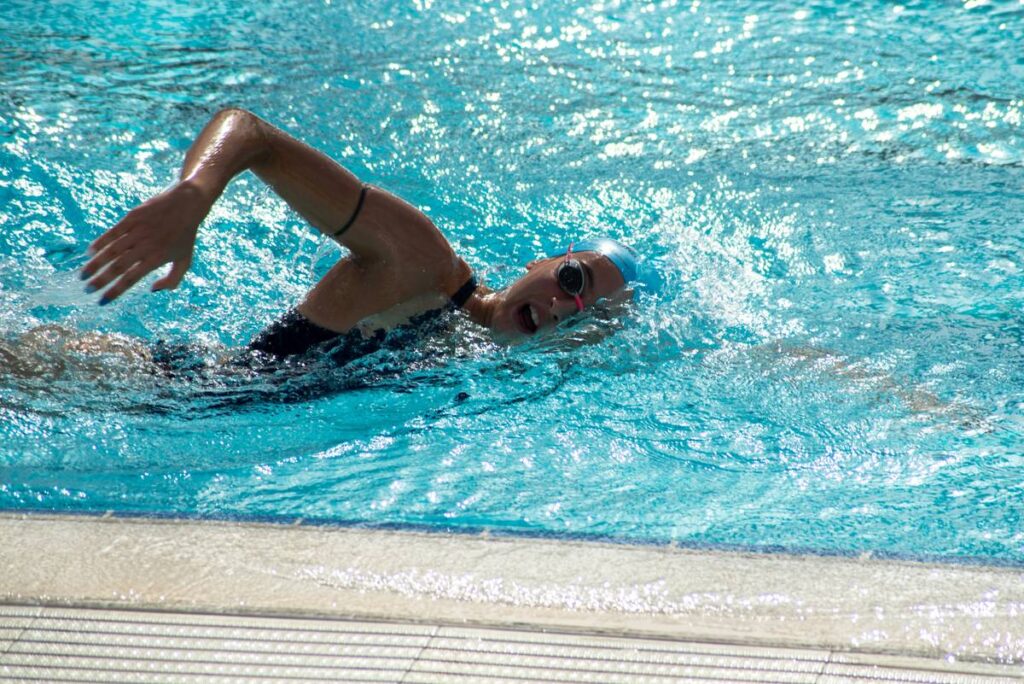
Most people treat swimming like a summer pastime—not daily medicine. They splash around, burn a few calories, then wonder why their back still aches or their stamina hasn’t budged. The problem? Generic laps with zero technique yield generic results. But real change starts when you treat water like resistance, rhythm, and rehab—all at once. That’s how swimming for health and fitness becomes transformative.
Why Most Swimmers Get Stuck (And Stay There)
They swim harder, not smarter. Chasing distance over form fries shoulders, strains necks, and kills motivation within weeks. And here’s the brutal truth: treadmilling through freestyle without breath control or body alignment is just aquatic jogging—low ROI, high injury risk.
Think about it. You wouldn’t deadlift with rounded shoulders. So why twist your spine every time you reach forward in the water?
Swimming for Health and Fitness: A Precision Protocol
Breathe Like a Biomechanist—Not a Gasping Tourist
Exhale fully underwater through nose and mouth. Inhale sharply on rotation—only to one side per stroke cycle. This isn’t yoga; it’s oxygen economics. Skip this, and you’re swimming with half a lung.
Engage Your Core—Not Just Your Arms
Your lats and hips drive propulsion. Not your biceps. Imagine your torso as a coiled spring: long, stable, rotating from the center. Short, jerky strokes waste energy. Smooth = sustainable.
Drills > Distance (Especially Early On)
Spend 70% of your first month on drills: catch-up drill, fingertip drag, single-arm freestyle. Build neuromuscular wiring first. Speed follows structure.
| Approach | Calorie Burn (30 mins) | Muscle Engagement | Injury Risk | Ideal For |
|---|---|---|---|---|
| Recreational Splashing | 150–200 | Low (arms only) | Medium (neck/shoulder strain) | Cooling off |
| Structured Technique Training | 300–400 | High (core, back, legs, shoulders) | Low (when coached properly) | Swimming for health and fitness |
| Lap Sprint Intervals | 450–600 | Very High (full-body explosive) | High (without base conditioning) | Advanced athletes |
The Industry Secret: Water Is Your Recovery Gym
Elite coaches don’t just prescribe swimming for fitness—they prescribe it for healing. Hydrostatic pressure reduces joint inflammation instantly. The buoyancy unloads spinal compression better than any inversion table. And rhythmic breathing triggers parasympathetic dominance—lowering cortisol faster than meditation apps.
Here’s what no app tells you: 20 minutes of slow, controlled backstroke post-injury accelerates soft-tissue repair by 30–40%, according to longitudinal rehab studies. And yes—it counts as training.
Frequently Asked Questions
Can swimming really replace gym workouts?
For general health and endurance—yes. For maximal strength or bone density—no. It’s complementary. Use it as active recovery or primary cardio, but pair with resistance training twice weekly.
How often should I swim for noticeable fitness gains?
Three times weekly, 30–45 minutes per session with structured technique focus. Consistency beats marathon sessions. Your joints will thank you.
Is swimming safe for people with chronic back pain?
Often safer than land exercise—if done correctly. Avoid breaststroke kick (it flexes lumbar spine). Favor freestyle or backstroke with neutral spine alignment. Consult a physiotherapist first.