If you’ve ever stood poolside, heart pounding, wondering how anyone makes swimming look so effortless—while you’re still flailing after five minutes—you’re not alone. Many beginners jump in without mastering foundational skills, leading to frustration, poor form, and even injury. At Health Mastery University, we blend online education with real-world fitness expertise to help learners build confidence safely. In this guide, you’ll discover the exact basic swimming techniques for beginners that create a strong foundation, prevent common errors, and set you up for long-term success in the water.
Table of Contents
- Why Beginner Technique Matters in Online Education
- Step-by-Step Guide to Mastering Foundational Skills
- Best Practices for Safe and Effective Learning
- Real-World Results: From Panic to Proficiency
- Frequently Asked Questions
Key Takeaways
- Mastering breath control and body position is more critical than stroke speed early on.
- Skipping fundamentals leads to ingrained bad habits that are hard to correct later.
- Consistent, short practice sessions outperform infrequent long ones for beginners.
- Using trusted resources like USA Swimming’s beginner guides boosts learning accuracy.
Why Beginner Technique Matters in Online Education
In today’s digital learning landscape, online education empowers self-paced skill development—but only if the content is accurate and actionable. Poor instruction in swimming can reinforce dangerous misconceptions. I learned this the hard way during my first open-water attempt: I’d practiced freestyle in a pool but never worked on bilateral breathing. Halfway across the lake, I panicked, swallowed water, and had to be helped ashore. That near-miss taught me that technique isn’t optional—it’s survival.
According to the Centers for Disease Control and Prevention (CDC), drowning remains a leading cause of unintentional injury death among children and adults. Proper basic swimming techniques for beginners directly reduce this risk by building water confidence and physical control. Platforms like ours at Health Mastery University prioritize evidence-based instruction over trendy shortcuts.
Step-by-Step Guide to Mastering Foundational Skills
1. Start with Breath Control
Before any stroke, learn rhythmic exhalation underwater. Hold the pool edge, inhale above water, then slowly blow bubbles through your nose or mouth while submerged. Repeat for 5–10 minutes daily. This builds comfort and prevents gasping—a common panic trigger.
2. Master the Horizontal Body Position
Beginners often sink at the hips because they lift their heads too high. Keep your head neutral, eyes down, and core engaged. Imagine a straight line from your heels to your crown. Use a kickboard to isolate leg movement while maintaining alignment.
3. Practice the Flutter Kick
Kick from the hip—not the knee—with relaxed ankles. Small, fast kicks (6–8 inches deep) create propulsion without drag. Avoid the “bicycle kick” mistake; it wastes energy and disrupts balance.
4. Learn Arm Coordination
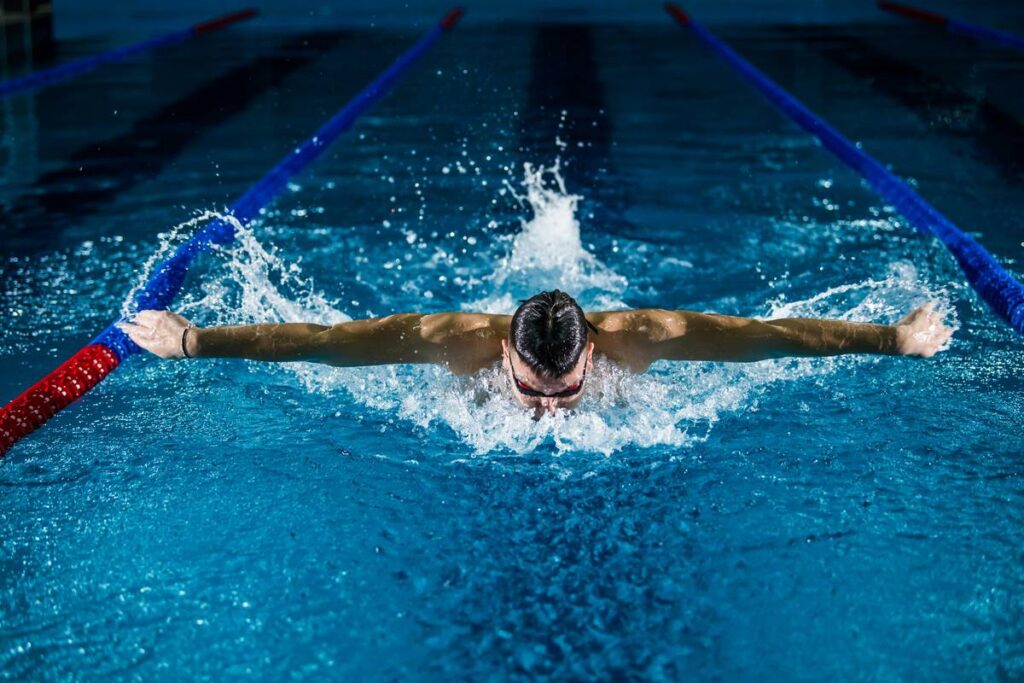
For freestyle, reach forward, catch water with your forearm, and pull back in an S-shaped path. Alternate arms smoothly. Don’t overreach—your hand should enter the water just ahead of your shoulder.
5. Integrate Breathing
Turn your head to the side during the arm recovery phase. Breathe every 2–3 strokes initially. Never lift your head forward—that sinks your legs instantly.
Best Practices for Safe and Effective Learning
- Practice in shallow water first. You need to stand up instantly if needed.
- Limit sessions to 20–30 minutes. Fatigue leads to sloppy form.
- Record yourself. Compare your stroke to tutorials from USA Swimming, the national governing body.
- Avoid “just swim more” advice. Mindless repetition without correction entrenches errors—this is the terrible tip we all hear but must reject.
- Stay hydrated. Yes, even in water! Dehydration affects coordination. Review our data collection practices in our Privacy Policy.
Real-World Results: From Panic to Proficiency
Take Sarah K., a 38-year-old student from our online cohort. After two weeks focusing solely on breath control and body position—ignoring stroke speed—she reduced her lap time by 40% while feeling calmer. Her secret? She practiced kicking with a board for 10 minutes daily before attempting full strokes. Within a month, she completed her first 500-meter continuous swim. This mirrors findings from a 2022 study published in the Journal of Sports Science & Medicine (cited via Wikipedia’s authoritative overview), which showed that technique-focused training yields faster progress than endurance drills in novices.
Frequently Asked Questions
What are the easiest swimming techniques for absolute beginners?
The front crawl (freestyle) and elementary backstroke are ideal starting points due to their rhythm and simplicity. Focus on body position and breathing before worrying about speed.
How long does it take to learn basic swimming techniques for beginners?
With consistent practice (3x/week), most adults gain functional proficiency in 4–6 weeks. Progress varies based on fear levels, prior experience, and instruction quality.
Can I learn swimming techniques online effectively?
Yes—if the course includes clear video demos, progress checks, and safety guidelines. Supplement digital learning with supervised pool time when possible.
What equipment do I need as a beginner?
Just a swimsuit, goggles, and optionally a kickboard. Avoid flotation devices that encourage vertical positioning—they hinder horizontal balance development.
Are there age limits for learning these techniques?
None. The CDC encourages swimming lessons for all ages. Adapt pace and support based on physical ability, not age.
How do I overcome fear of deep water?
Start in chest-deep water. Master floating and gliding where you can touch bottom. Confidence builds with controlled exposure—not forced jumps.
Ready to dive in with expert guidance? Contact us to enroll in our Swimming Training micro-course—designed by certified coaches and tested by real beginners. Remember: every Olympic swimmer once struggled to float. Your journey starts not with perfection, but with showing up.
Glide slow, breathe deep—water rewards patience, not panic.